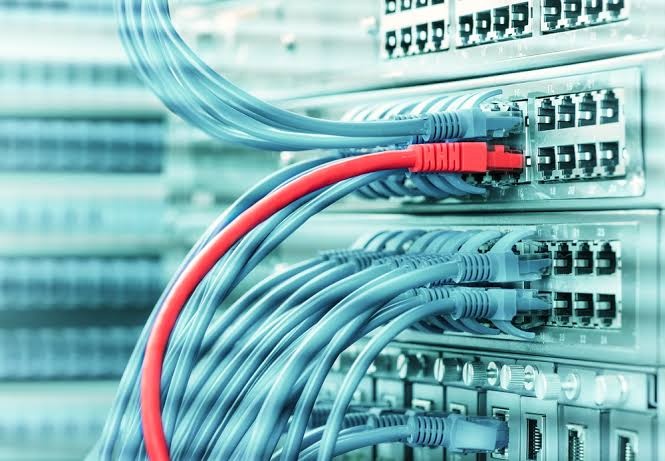
Walk into a modern office and you will probably notice the visible technology first: computers, monitors, wireless access points, phones and perhaps a few security cameras. What is easy to overlook is the infrastructure connecting all of those devices.
Behind the walls, ceilings and network racks, hundreds of metres of cabling may be responsible for keeping business systems connected. When that infrastructure is poorly planned, problems can appear in places that seem unrelated to the cabling itself.
For this reason, businesses should give careful thought to the company they choose for their network infrastructure. Understanding what to expect from network cabling companies in Dubai can help businesses avoid unnecessary problems and build a network that can support their operations for years.
A reliable network begins with a reliable physical connection.
Employees may depend on wired connections for computers, IP phones, printers and other equipment. Wireless access points also need a dependable connection to the network infrastructure. CCTV systems, servers and other connected devices may have their own cabling requirements.
If cables are incorrectly terminated, poorly organized or installed without considering the wider network design, troubleshooting can become difficult.
A structured cabling installation brings these connections together in a planned manner. Network points, patch panels, racks and cables can be organized so that technicians can identify and maintain them more easily.
There is no single cable type that suits every application.
Cat6 is commonly used for business network connections and can be suitable for many standard office environments. Cat6A may be considered when businesses want greater capacity and additional headroom for future requirements.
Fiber optic cabling serves a different purpose. It can be useful for longer-distance connections and network backbones where high bandwidth is required.
The right choice depends on factors such as building size, network architecture, equipment, distance and future expansion plans.
A good installer should therefore assess the environment before recommending materials rather than simply using the same solution for every project.
A proper site survey can reveal issues that may not be obvious from a floor plan.
The installer can assess where network equipment will be located, how cables can be routed, where access points are required and whether existing infrastructure can be reused.
The physical environment matters too. Electrical interference, ceiling construction, cable pathways and equipment-room conditions can all influence installation decisions.
For a business moving into a new Dubai office, completing this assessment before construction or interior work is finished can also help avoid unnecessary rework.
It might not seem important when everything is working, but cable management becomes valuable when something needs to be changed.
A network rack with clearly labelled and properly routed cables is much easier to understand than one containing a collection of tangled, unidentified connections.
Good cable management can make routine maintenance easier and reduce the time required to trace a particular connection. It can also create a cleaner installation that leaves room for additional equipment.
This becomes increasingly important as businesses add more employees, network devices, cameras, phones and wireless access points.
Installing a cable is only part of the job. The connection should also be tested to verify that it performs as expected.
Testing can identify problems such as incorrect termination, damaged cables or performance issues before the network is fully operational.
Businesses should ask potential contractors whether testing is included in their installation service and whether documentation or certification will be provided where appropriate.
This simple step can prevent a situation where network problems are discovered only after employees have moved into the office.
One of the most common mistakes is designing infrastructure exclusively around current requirements.
A business might start with 25 employees and eventually grow to 60. It may also add more CCTV cameras, meeting-room equipment, wireless access points or IP phones.
That does not mean a company needs to install excessive cabling everywhere. Instead, the infrastructure should be designed with realistic expansion in mind.
Additional network points, spare capacity and accessible cable pathways can make future upgrades considerably easier.
When comparing network cabling companies in Dubai, businesses should therefore discuss not only what they need today but also what they expect their network to look like in the coming years.
Sometimes it can. Sometimes replacing it is the better option.
Existing infrastructure should be assessed rather than automatically kept or removed. The condition of the cables, their category, installation quality, documentation and compatibility with the planned network all matter.
Reusing suitable infrastructure can reduce project costs and installation time. On the other hand, retaining outdated or poorly installed cabling may create problems that become more expensive to resolve later.
An experienced contractor should be able to explain the advantages and disadvantages of both options.
Price is naturally part of the decision, but it should not be the only consideration.
Before appointing a contractor, businesses can ask about the materials being proposed, installation methodology, testing procedures, cable labelling, documentation, warranty and post-installation support.
It is also useful to understand whether the company has experience with similar commercial environments.
A low quotation may initially look attractive, but if it excludes testing, proper cable management or documentation, the final cost can be higher than expected.
Cabling does not operate independently.
It supports switches, routers, servers, wireless access points, IP phones, CCTV cameras and other network-connected equipment. A well-designed cabling system therefore needs to fit into the wider IT infrastructure.
Coordination is particularly important during office fit-outs. Network requirements should be considered alongside electrical work, security systems and the placement of IT equipment.
Good planning at this stage can reduce disruption later.
Businesses often notice their network only when something goes wrong. A slow connection, failed network point or difficult-to-trace cable can quickly become an operational problem.
Choosing the right network cabling companies in Dubai can help businesses avoid many of these issues by establishing a structured, tested and maintainable infrastructure from the beginning.
The best installation is not necessarily the one with the lowest initial price or the largest number of cables. It is the one designed around the company's actual requirements, installed carefully, properly tested and planned with future growth in mind.
For businesses investing in new offices, expansions or network upgrades, treating cabling as a core part of the IT infrastructure can make the technology that sits on top of it far easier to manage.

This post has been authored and published by one of our premium contributors, who are experts in their fields. They bring high-quality, well-researched content that adds significant value to our platform.