Television has moved far beyond the traditional broadcast model. Today, viewers expect more flexibility, better picture quality, faster access to content, and the freedom to watch across multiple devices. At the centre of this transformation is IPTV UK, a technology that delivers television programming through internet networks rather than relying exclusively on traditional satellite, cable, or terrestrial broadcasting.
For viewers exploring modern entertainment options, understanding what happens behind the screen can make it easier to choose a suitable IPTV UK Subscription. From internet protocols and streaming servers to adaptive video quality and connected devices, several technologies work together to create the viewing experience.
IPTV, or Internet Protocol Television, refers to television content delivered through an internet connection using Internet Protocol networks. Instead of receiving a television signal through a conventional broadcast system, compatible content is transmitted as digital data through an IP network.
The basic process is straightforward. A provider prepares and stores television content on powerful servers. When a viewer selects a channel or programme, the requested data is delivered through the internet to the user's compatible device. The device then processes the incoming data and displays it as video and audio.
This approach gives IPTV a significant degree of flexibility. Television content can be delivered to Smart TVs, streaming boxes, computers, smartphones, tablets, and other compatible devices, depending on the service and application being used.
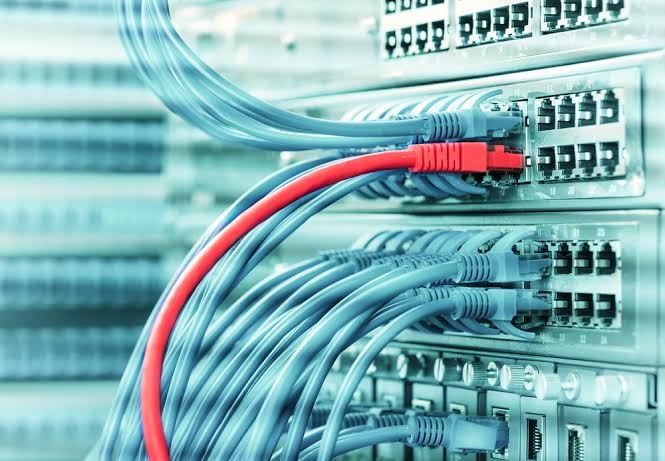
A reliable internet connection is one of the most important components behind an IPTV UK experience. Unlike traditional broadcasting, IPTV depends on data travelling across internet networks between servers and viewers.
When a viewer selects a live channel, the service needs to transmit a continuous stream of video data. The faster and more stable the connection, the better the potential viewing experience.
Internet performance involves more than download speed alone. Latency, network stability, congestion, Wi-Fi performance, and connection quality can all influence streaming.
For this reason, a strong home network can be just as important as the IPTV service itself. Connecting a television or streaming device through Ethernet can sometimes provide a more consistent connection than relying on a congested wireless network.
Behind every online television service is an infrastructure designed to deliver large quantities of digital content. Streaming servers store, process, and distribute video to viewers.
When thousands of people watch content simultaneously, the infrastructure needs to handle enormous amounts of data. Modern services therefore rely on scalable server environments and content-distribution technologies to deliver streams efficiently.
A well-designed infrastructure can reduce delays and improve reliability by distributing traffic across multiple servers or network locations. This becomes particularly important during popular live events, when demand can increase dramatically within a short period.
The quality of the underlying infrastructure can therefore have a direct effect on the viewer's experience.
Live television presents a unique technical challenge because viewers expect content to arrive continuously and with minimal delay.
A live broadcast is captured and encoded into a digital format. The resulting data is divided into manageable portions and distributed through the streaming infrastructure. The viewer's IPTV application receives those portions and continuously reconstructs them into moving images and sound.
This process happens extremely quickly. Although there can be a delay between the original broadcast and what appears on a viewer's screen, modern streaming technology is designed to keep that delay as small as practical.
The technology behind live IPTV streaming has therefore become increasingly sophisticated, particularly as viewers expect smoother playback and more responsive television services.
High-quality video contains enormous amounts of data. Sending uncompressed television footage over the internet would require impractical amounts of bandwidth.
This is where video compression becomes essential.
Encoding technologies reduce the size of video files while attempting to preserve visual quality. Modern codecs can significantly reduce bandwidth requirements, allowing high-definition and ultra-high-definition video to be delivered through consumer internet connections.
The balance is important. Excessive compression can produce visible artifacts, blurry images, or loss of detail. Efficient encoding, on the other hand, can provide impressive picture quality while keeping data consumption manageable.
This technology is one reason viewers can increasingly access HD and 4K streaming without needing the infrastructure traditionally associated with broadcast television.
Internet connections are not always consistent. Network congestion can cause available bandwidth to fluctuate, particularly when several devices share the same connection.
Modern streaming systems can address this challenge through adaptive bitrate streaming.
Instead of relying on one fixed video quality, a stream may be prepared at several different quality levels. The playback system monitors network conditions and can switch between them when necessary.
For example, a viewer might initially receive a high-quality stream. If network performance suddenly drops, the application can temporarily reduce video quality to prevent continuous buffering. When the connection improves, the system can increase quality again.
This technology helps create a smoother experience across different network conditions.
The IPTV application is the part of the technology that viewers interact with directly. It provides the interface used to browse channels, select programmes, manage playlists, and control playback.
A well-designed application can make a significant difference to usability. Features such as electronic programme guides, favourites, search functions, categories, catch-up options, and multi-device support can make large content libraries easier to navigate.
Applications also act as an intermediary between the user's device and the streaming infrastructure. They receive information from the service, process the available content sources, and provide the playback interface.
Compatibility should therefore be considered carefully when choosing an IPTV UK Subscription.
Modern IPTV is not simply about delivering video. It can also deliver extensive information about that video.
An Electronic Programme Guide (EPG) can display channel schedules, programme titles, descriptions, broadcast times, and other information. This transforms an internet-based channel list into something that feels much closer to a traditional television guide.
Metadata is responsible for much of this organisation. It tells applications what content is available and provides information that can be displayed alongside channels and programmes.
For viewers, good metadata can make thousands of available channels significantly easier to navigate.
One of the strongest characteristics of modern IPTV is its compatibility with connected technology.
Depending on the service and application, IPTV may work across Smart TVs, Android-based devices, streaming players, computers, tablets, and smartphones.
This changes the relationship between viewers and television. The screen no longer has to be a fixed television in the living room. Content can potentially follow viewers between different compatible devices.
This flexibility is particularly relevant to households where different family members have different viewing preferences.
Picture quality has become an important part of the modern streaming experience. 4K resolution provides substantially more pixels than Full HD, allowing compatible content to appear sharper and more detailed.
However, resolution alone does not guarantee excellent picture quality. The source quality, encoding efficiency, bitrate, display capabilities, and internet connection all matter.
A genuine high-quality 4K stream requires considerably more data than standard-definition video. Viewers therefore need suitable internet performance and hardware capable of displaying the resolution.
Understanding these technical requirements helps prevent unrealistic expectations when evaluating IPTV services.
Buffering occurs when a playback device cannot receive enough data quickly enough to maintain continuous playback.
There are several potential causes. The viewer's internet connection may be unstable, the Wi-Fi network may be congested, the device may have limited performance, or the streaming server may be experiencing heavy demand.
Home network problems are often overlooked. Multiple simultaneous downloads, gaming sessions, video calls, and other streaming devices can consume available bandwidth.
Improving Wi-Fi positioning, reducing network congestion, updating equipment, or using a wired connection may help in suitable circumstances.
Technology alone does not determine whether an IPTV service is trustworthy. Viewers should also consider the legitimacy, transparency, security, and reputation of a provider.
A responsible IPTV UK Subscription should clearly communicate what it offers, how customers can obtain support, and what terms apply to the service.
Consumers should also be cautious about services making unrealistic promises, requesting unusual payment methods, or providing unclear information about their operations.
Using legitimate services and compatible applications helps create a safer and more reliable entertainment environment.
Even technically advanced IPTV services can encounter problems. Devices may require configuration, applications can experience compatibility issues, and network conditions can change.
This makes customer support an important consideration when comparing services.
Useful support should provide clear guidance about installation, device compatibility, account management, troubleshooting, and common streaming problems. A provider that communicates clearly can make the transition to internet-based television considerably easier.
Technology provides the foundation, but the quality of an IPTV experience depends on how that technology is implemented.
When evaluating an IPTV UK Subscription, viewers should consider:
These factors are often more meaningful than simply counting the number of channels advertised.
The development of IPTV is closely connected to the wider evolution of internet technology. Faster broadband, improved compression, more capable streaming hardware, smarter applications, and increasingly sophisticated content-delivery networks are continuing to reshape digital television.
Viewers are also becoming accustomed to personalised and on-demand entertainment. Instead of treating television as a fixed schedule, modern platforms increasingly combine live channels with libraries, recommendations, replay options, and other digital features.
The result is a television environment that is more flexible and software-driven than previous generations.
The modern IPTV UK experience is powered by a combination of technologies rather than a single innovation. Internet networks provide the connection, servers distribute content, compression reduces bandwidth requirements, adaptive streaming responds to changing network conditions, and applications transform complex data into an accessible television interface.
For viewers considering an IPTV UK Subscription, understanding these fundamentals provides a clearer way to evaluate services. Instead of focusing only on channel numbers or promotional claims, it makes sense to look at reliability, compatibility, picture quality, infrastructure, support, and legitimate content delivery.
Behind every press of the remote control is a sophisticated chain of technologies working together. As internet connectivity and streaming technology continue to develop, that chain will play an increasingly important role in defining how television is delivered, accessed, and experienced across the UK.

This post has been authored and published by one of our premium contributors, who are experts in their fields. They bring high-quality, well-researched content that adds significant value to our platform.